History of El Estanque
Discover the evolution of this unique natural enclave
The Villadangos Lagoon, popularly known as “El Estanque,” is the only wetland preserved in the municipality of Villadangos del Páramo and stands as one of the most important and valuable in the province of León.
El Estanque
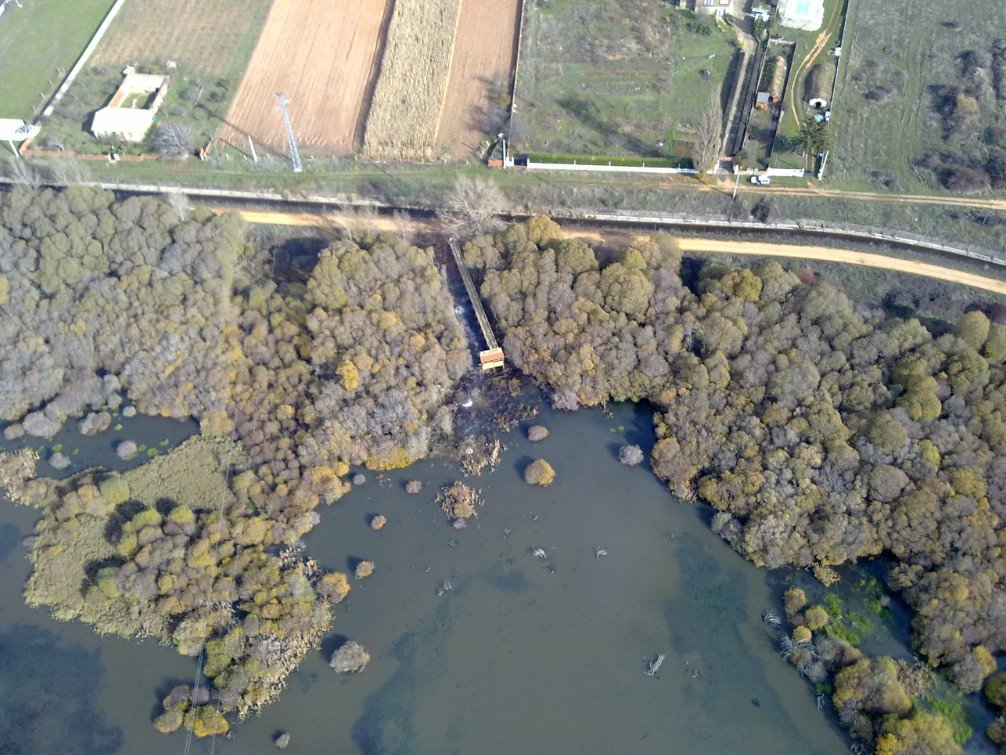
Aerial View
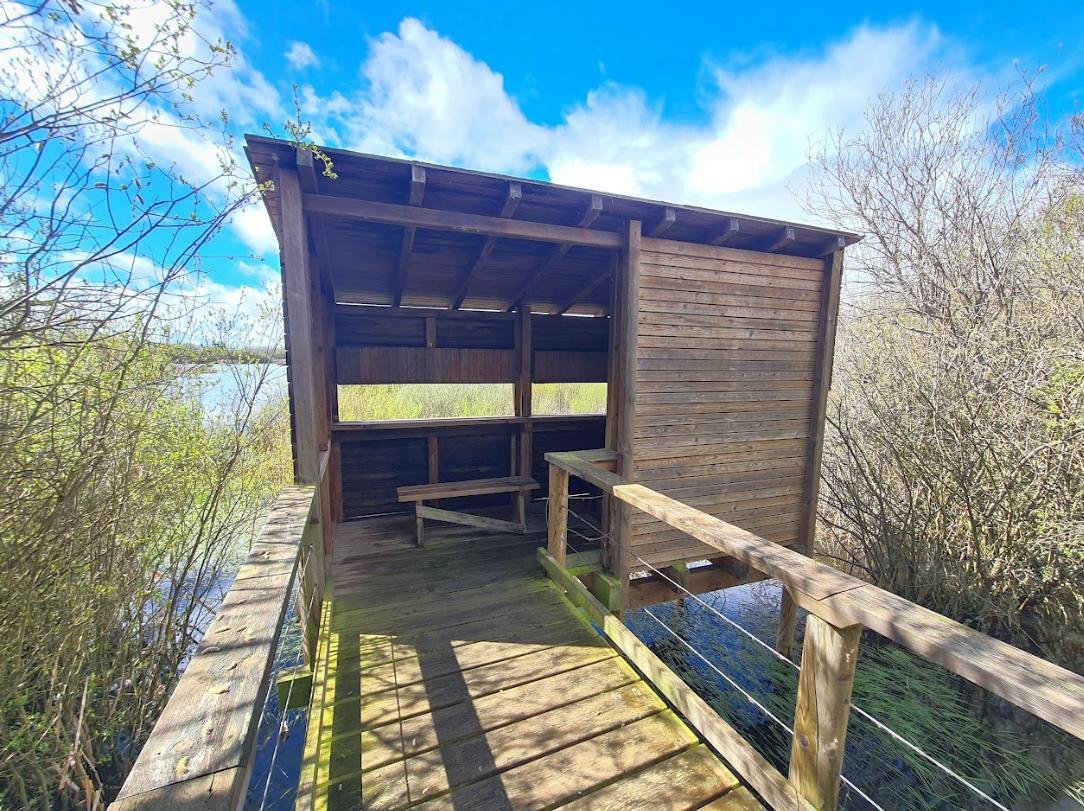
Bird Lookout
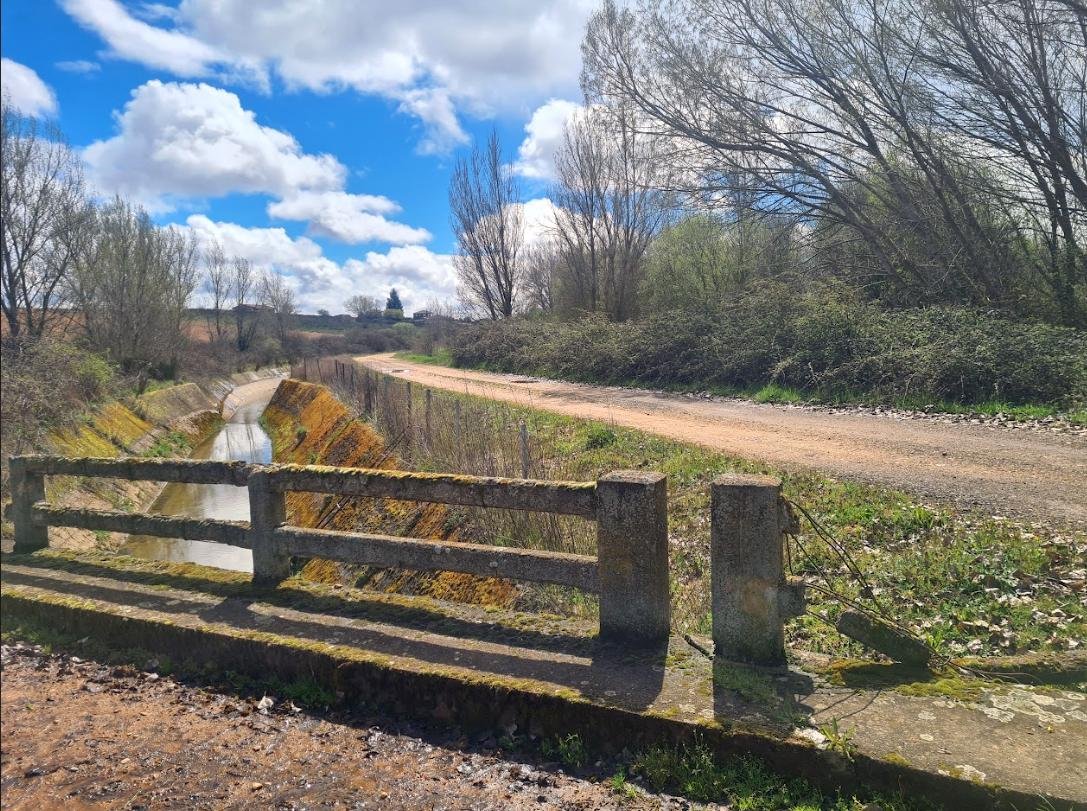
Irrigation canal
The Beginning of a Unique Place
This is an artificial lagoon built in the 1930s by the council and the residents of Villadangos on a large communal meadow on the outskirts of the town.
These lands, previously used as threshing floors for winnowing grain, already hosted an endorheic lagoon a seasonal wetland that would flood during winter and nearly dry out in summer. The inhabitants of Villadangos decided to put the stagnant waters to agricultural use by building, through communal labour (hacendera or facendera), earthen walls reinforced with vegetation (tapines). This enabled the creation of a water reservoir fed by nearby artesian wells and rainfall.
El Estanque covered an area of over 9 hectares, or 13 hectares when including the northern section where “El Estanquín,” a secondary water reservoir, served as a regulatory and supplementary basin. The moisture and water fostered a lush area of vegetable gardens northwest of the lagoon, which, despite not being near a riverbank, came to be known as “La Vega” or “La Veiga.” The communal threshing floors were reorganised around El Estanque: to the east were “Las Eras de la Ermita,” and to the west, “Las Eras de Atrás.” Near El Estanquín, there was also an area traditionally used by locals to make adobe bricks, a primary building material in the region.
This communal hydraulic infrastructure allowed irrigation of some fields and gardens in the lower part of the village, an area that became known as “La Regadera.” These lands were primarily used for cultivating legumes and potatoes, as well as for growing meadows and vegetable gardens to feed livestock. It is estimated that water from El Estanque irrigated around 140 hectares of land, a remarkable achievement for a village with predominantly dryland farming. This greatly boosted agricultural productivity in Villadangos, significantly improving the residents’ quality of life. In addition to frogs, locals also fished tench in El Estanque, a delectable treat often pickled and integrated into the town’s gastronomy.
Evolución en fotografías
-

- Photograph from 1947 In 1947, just a few years after the construction of El Estanque, all its walls were clearly visible, as well as the Camino Real, which connected Madrid with Asturias via the Puerto de Ventana.

-
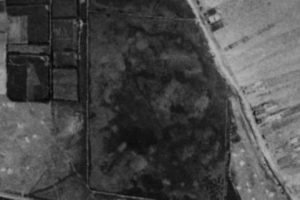
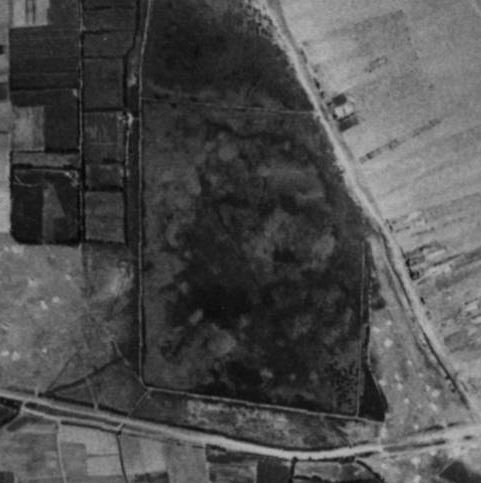
- Photograph from 1956 By the mid-1950s, the vegetable gardens of La Veiga were already visible, as well as the new route of the Villadangos to Celadilla road. The Eras de Atrás and the Eras de la Ermita were still noticeable to the left and right of El Estanque, respectively.
-
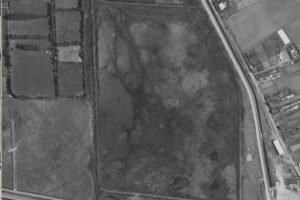
- Photograph from 1976 In the 1970s, with the introduction of irrigation systems, the transformation of El Estanque into the Villadangos Lagoon began. Additionally, the layout of the new Villadangos Canal, which replaced most of the Camino Real, became apparent.
-
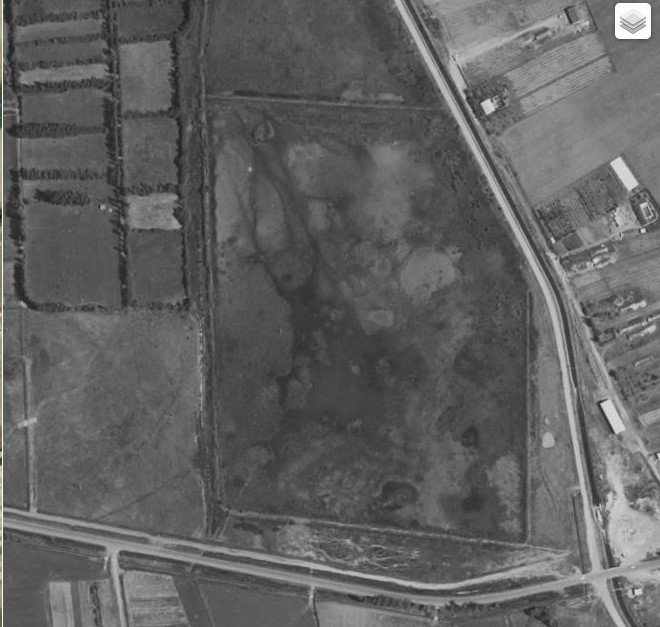
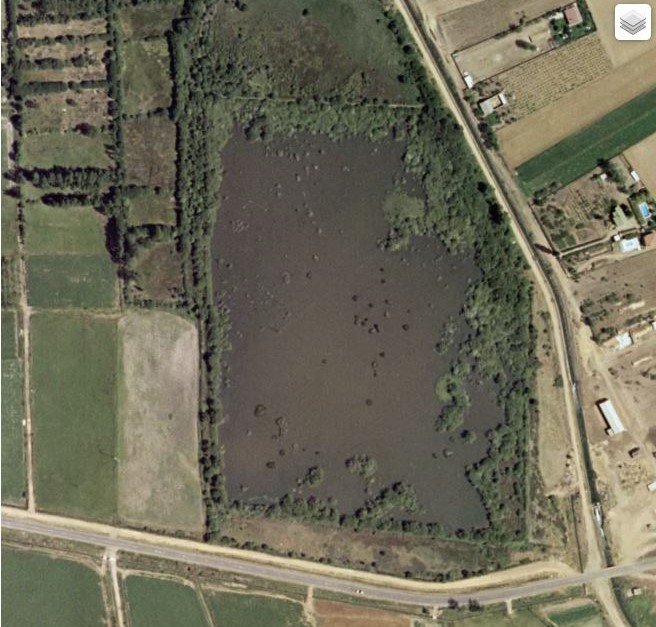
- Photograph from 1997 By the late 20th century, the Villadangos Lagoon had become a habitat for numerous species and was filled with abundant vegetation. Despite this, the walls were still fully traversable, and bird ringing and cataloguing activities began to take place.
-
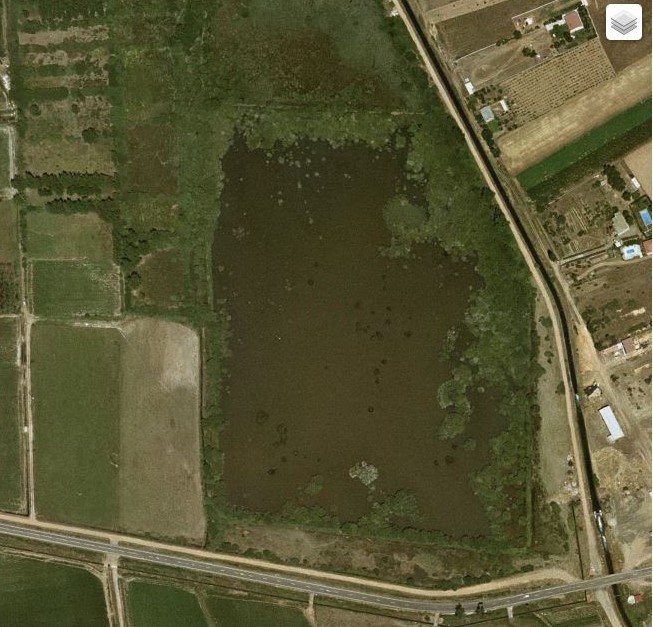
- Photograph from 2004 The Villadangos Lagoon, already designated as a Wetland of Special Interest, began to experience neglect and damage. In some areas, illegal dumping sites were created by taking advantage of the uneven terrain, and the walls became impassable due to the dense vegetation, leading to the cessation of ornithological activities.
-
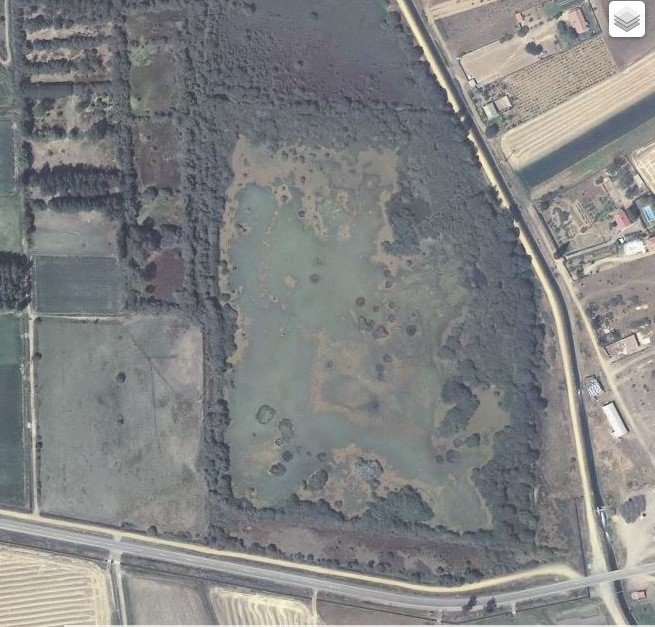
- Photograph from 2010 The summer drought of 2010, combined with the damage that the lagoon's walls were beginning to suffer in some areas, caused it to dry up so severely that it was possible to walk through its interior. That summer, the population of aquatic species suffered devastating losses.
-
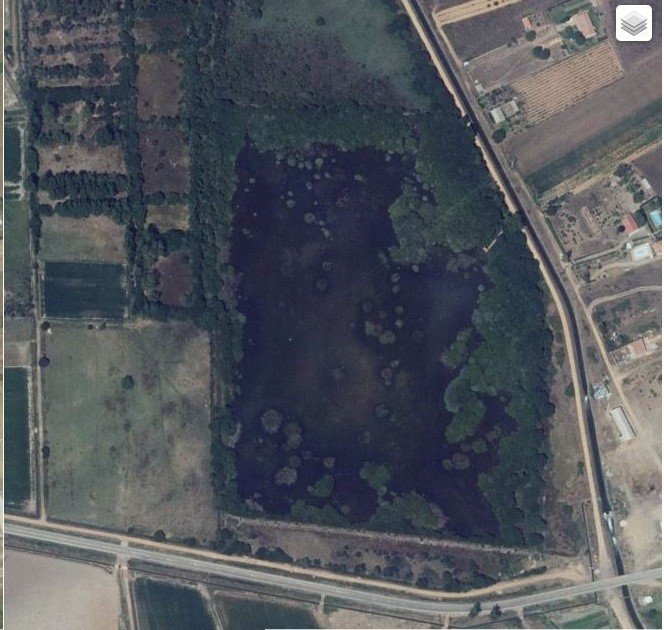
- Photograph from 2014 The vegetation gradually took over the entire Villadangos Lagoon area, but so did weeds, bringing a fire hazard during the hottest months of the year. Despite efforts to conceal rubble and create a small birdwatching viewpoint, El Estanque was neither accessible nor appealing for visitors.
-
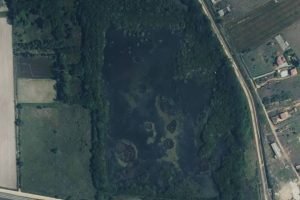
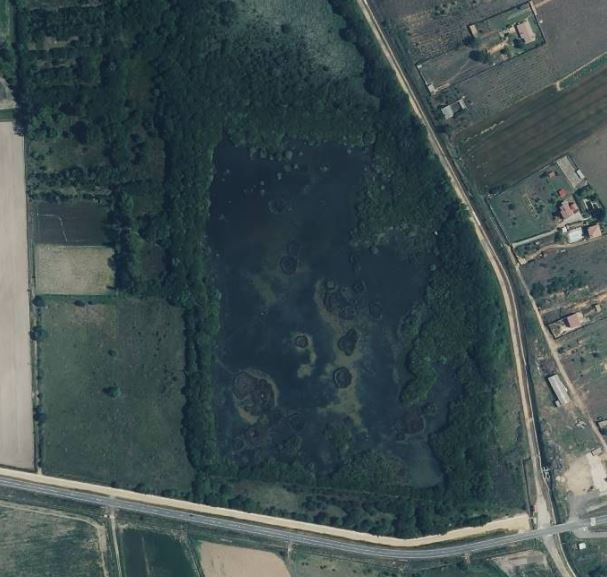
- Photograph from 2023 In 2023, prior to the commencement of efforts to enhance and restore the Villadangos Lagoon and its surroundings through the Villadangos Tourism Sustainability Plan, driven by the Villadangos Town Council, we can observe the dense vegetation surrounding what was once El Estanque.
Driven by the Villadangos Community
The importance of El Estanque to Villadangos is evident in the great care its residents took to maintain it, cleaning and repairing its walls year after year through communal labour (hacienda pública).
A clear example of how highly the Villadangos community valued it is preserved in a document that has survived to this day, which reads as follows:
AGREEMENT MADE BY THE RESIDENTS OF THE VILLAGE OF VILLADANGOS DEL PÁRAMO
In Villadangos del Páramo, on 22nd October 1944, all the residents gathered and, being in agreement, resolved the following:
They all express their gratitude for the decision made by the Head of Public Works regarding the alteration of the Valcabado to Combarros road, specifically the section from Villadangos to Celadilla, thereby preserving the pond located in this village at the site known as Eras de la Ermita. This pond is of incalculable utility to the residents of this aforementioned village of Villadangos, as its water is dedicated to the irrigation of the fields. And since the rerouting of the said road will occupy private lands that are yet unknown, it is hereby stated that the residents whose properties are affected by the passage through their lands willingly agree to cede the aforementioned passage. (…) And being all united and in agreement, they sign this document to which they voluntarily submit.
The document is completed with the signatures of all the residents present at the meeting. The original scanned document can be downloaded via this link: Escrito Vecinos Villadangos 1944.
To understand the context of this document, we must go back to the time when the road, which now bypasses the lagoon, was initially planned to cross through El Estanque, threatening its disappearance. The efforts of the residents and local authorities paid off, and although some individuals had to relinquish private land, the road’s route was altered, and El Estanque was preserved.
Villadangos Irrigation Canal
With the inauguration of the Villadangos Irrigation Canal in the late 1960s, El Estanque fell into disuse and gradually lost the interest of the local residents, leading to its complete abandonment by the 1980s.
This neglect facilitated the growth of trees and vegetation around El Estanque, which gradually transformed into a lagoon. Wildlife, particularly birds, began to arrive, marking the beginning of temporary settlements for migratory birds and the permanent presence of other species, which completed their reproductive cycles.
The natural enclave that formed around El Estanque, now known as the Villadangos Lagoon, spans approximately 16 hectares, hosting extraordinary biological and scenic richness.
In a census conducted in January 1999, the Spanish Ornithological Society counted 1,770 waterbirds of various species at this site, a record number among all wetlands studied in the province of León.
In 2001, the Villadangos Lagoon was designated as a Wetland of Special Interest and included in the Catalogue of Wetlands of Castilla y León with the code LE-20 (Decree 125/2001, 19 April).

Revitalisation Project
With the arrival of the 21st century, the abandonment that had initially allowed the creation of a unique natural space began to cause more degradation than conservation. By 2020, the issues threatening El Estanque ranged from a high risk of fire, illegal dumping, and poaching, to the breaking of its walls, water loss, and the rotting of roots and tree trunks in the surrounding area. Despite a minor intervention in 2010 of limited scope, the Villadangos Lagoon required a significant investment and a highly ambitious project to sustainably and efficiently address the problems deteriorating the site.
In 2021, the Villadangos del Páramo Town Council, under the leadership of Mayor Alejandro Barrera García, presented a project for the enhancement and conservation of the Villadangos Lagoon. After being evaluated and scored by both the Junta de Castilla y León and the Government of Spain, the project culminated in the approval of the Villadangos del Páramo Tourism Sustainability Plan on 23 December 2021.